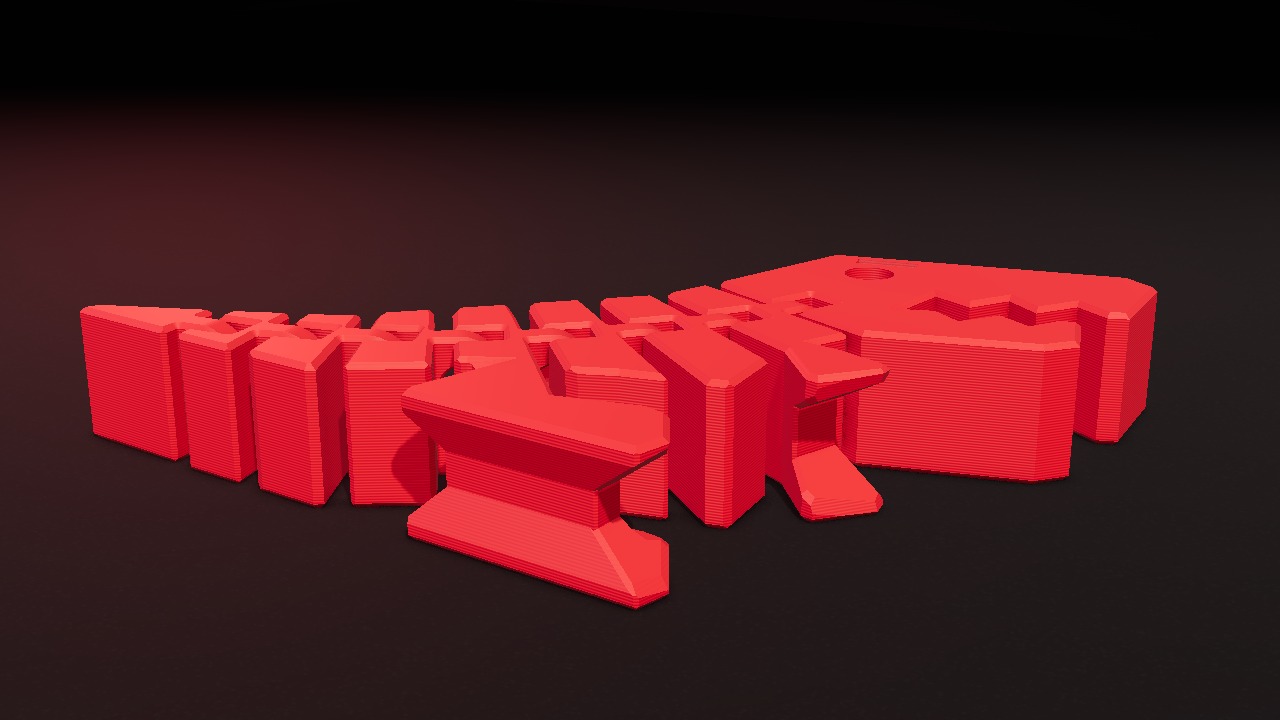
Loading 3D model…
Drag to rotate · scroll to zoom · actual print file
Free Made by humans
Working Model Steam Engine
Open-source working model steam engine you can print at home.
by 0x3b29
Create a free account to download
Already have one? Log in
- Materials
- PLA
- Multicolor
- Single color
- Supports
- None needed
License: CC0 1.0 (Public Domain Dedication)
Commercial use is allowed under this license. Credit the author where required. Learn more
About this model
The goal of this project was to design a 3D printable steam engine. I challenged myself to come up with a design without looking up anything at all. I wanted to see how far I could get with only the knowledge I learned over time. To be honest, I did not expect getting very far, regardless getting a one and a four stroke variant to work.
This repository contains two variants of a design I came up in the spring 2020. It is inefficient and lacks the ability to work in both direktions. Also, there are quite some leeks which is an inherent flaw of 3D printing pressurized components whithout any seals. To get it to work, you need a source of pressurized gas. I used my dad's airbrush compressor. The air inlet in both designs is a replicaiton of the airbrush connection. This means you can connect a standard 2.5 mm hose to the 3D print. The 1 stroke design can operate with much lower pressure and spins at a higher rpm. The four stroke however is capable of starting in every position. The one stroke can stop at a dead point where you need to push it to get it spinning again. Also, since the leeks are four times higher in the four stroke engine, this variant uses much more air.
• All the parts can be printed in PLA (which I did). Since PLA is not very heat resilient, you should not try to power it with real steam tho • Besides the crankshaft and the base, all other parts can be orientated in a way that they don't need supports • All parts worked great printed with 0.2mm layer height •
Designed by 0x3b29 and shared under CC0 1.0. The ZIP includes every part and the original README.